


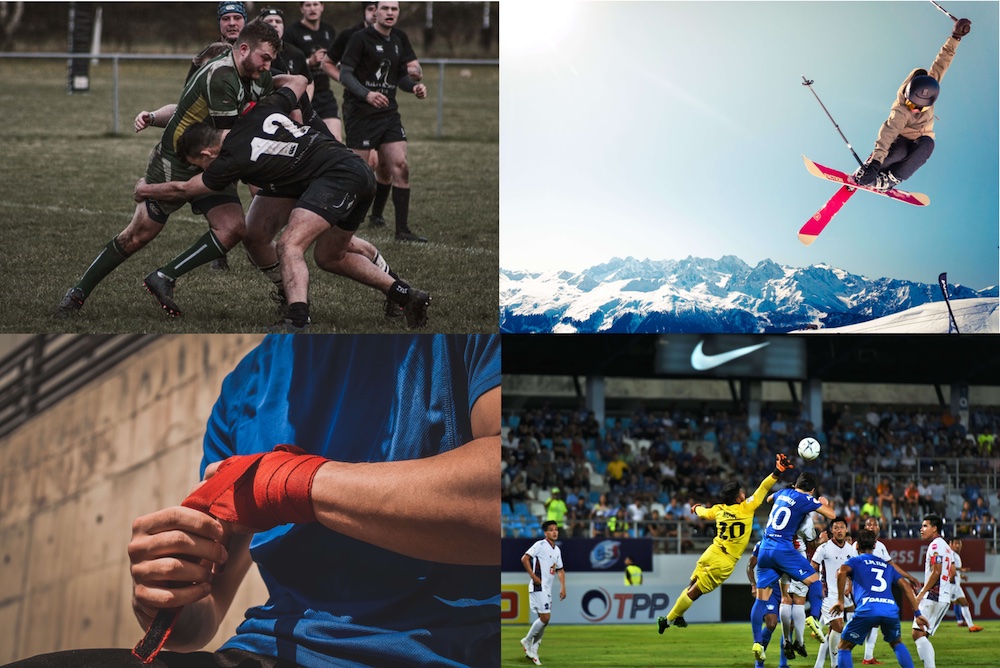
There are a number of different types of organisations in the sport sector that have a role to play in ensuring the safety of participants. National Governing Bodies are the organisations responsible for the running of their sport, including the rules and regulations that govern sporting activities. They are able to issue guidance to their affiliated leagues and clubs, and set requirements around training, medical provision and welfare, including the use of new equipment and technology to enhance safety and the treatment of injuries. They can also take action if these standards are not met. Governing Bodies are also the custodians of the rules of their sports, and can make adaptations to what happens on and around the field of play. Their role is to encourage participation in their sport across all age groups, levels of ability and genders, as well as to identify and support sporting excellence, and to do this in an inclusive and safe way. Player associations are involved with advocating for, and supporting the welfare of, elite and professional sportspeople, most often those actively playing sport but, in many cases, those retired as well. Player associations champion the needs of their members, commission research, provide education and training, as well as providing short and long-term support to those affected by sporting injuries. Sports councils are bodies established at arm’s length from Governments in each of the home nations. They are responsible for providing public funding to sports organisations in their countries, and are tasked with supporting the sector and creating an overall environment that will encourage both wider and greater participation in sporting activity. Individuals also have a role in helping to prevent and manage injuries. Those involved in running clubs, coaching or officials, whether as paid staff or as volunteers, have a responsibility to understand what is expected of them, implement approved protocols, undertake any relevant training and certification, set and implement standards, and act on any concerns. This means upholding standards around medical provision, ensuring equipment is safe to use, and that players receive the treatment they need if they suffer an injury. Most importantly, perhaps, the people taking part in sport are central to all considerations around safety. Individuals need to be made aware of the risks of taking part and be provided with clear advice about safety. They are also entitled to speak up if things are unclear or do not seem right. Players can be supported in this by their family, friends, fellow players, coaches, organisers, officials and spectators, who may be able to spot risks or issues that are not immediately obvious to those on the field of play. We agree with the Select Committee that the Government also has a role to play. The Government is able to step in and take action when and where it believes others are not able to, or where there is need to accelerate and coordinate action. The Government can use its convening power to bring organisations together to tackle complex, wide-ranging and long‑term issues. It can hold organisations to account, particularly where public funding is involved, and can raise the profile of issues, helping to draw attention to areas where more education, research and awareness is needed. It can also legislate if deemed essential. In the case of head injuries in sport, the risks to health and the potential negative impacts that this may have on participation in sport are such that the Government believes there is a need to ensure appropriate action is being taken, to raise the profile of the issue and to improve understanding, protocols and treatment. The Government intends to make use of its ability to bring sectors together to help improve awareness and practice around head injuries in sport. This is an area where the immediate impacts may be “passing” or perhaps not even be apparent to an observer or the person involved. However, there is increasing evidence to indicate that over the long-term, repeated head injuries can be associated with brain damage which may manifest itself in later life. Many sports organisations are already taking action to improve awareness and limit the risk of injury. However, much more must be done in a coordinated and consistent manner to improve national awareness, education and communication on this subject.
Roles and Responsibilities
Previous Report
next Report
next Report
previous Report