


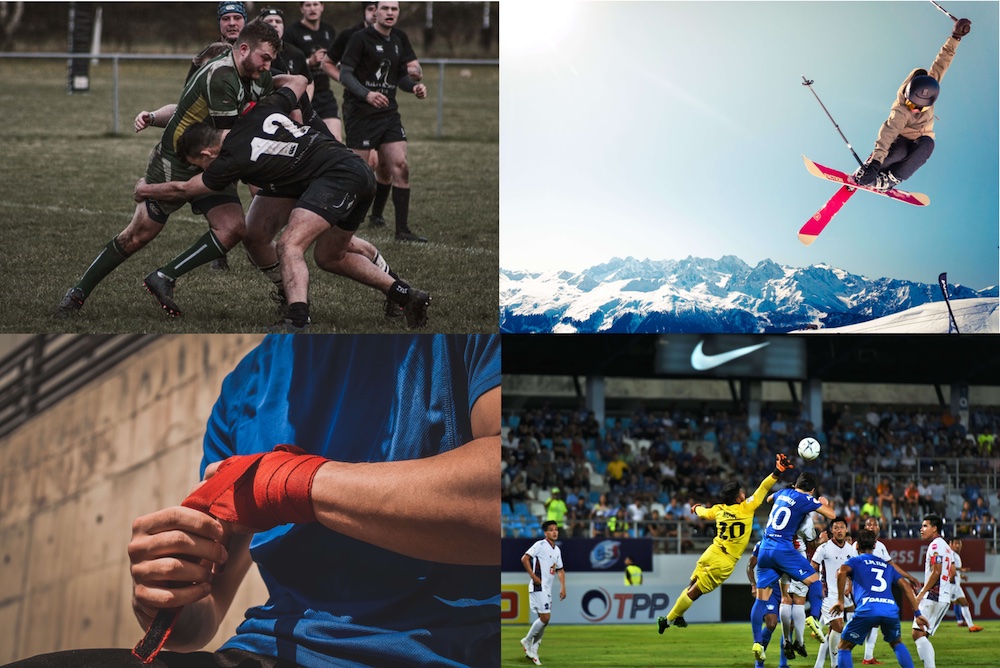

Although the issue of concussion and acquired brain injury in sport has received greater media attention in recent years, there remains a fundamental need to ensure that all sports participants have, at minimum, a basic understanding of what to look out for and what steps to take if someone receives a head injury.
As acknowledged by the Select Committee, sportscotland published an updated set of universal concussion guidelines in March 2018 for all sports to follow. Scotland was the first nation in the world to produce such guidelines covering all types and levels of sport (from grassroots to the elite level) and was updated in March 2021.5 Northern Ireland6 and Wales have also made good progress in improving concussion awareness in the sport setting.
The Sport and Recreation Alliance produced helpful concussion guidelines for the education sector in England in June 2015. These guidelines were approved by a panel of independent medical experts, as well as the Faculty of Sport and Exercise Medicine, the Royal College of Emergency Medicine and the Society of British Neurological Surgeons and were circulated to schools via the Association for Physical Education.
UK Coaching (the professional association for sports coaches in the United Kingdom) has advice on what coaches should look out for if they witness an incident that could lead to a concussion, as part of their ‘If in Doubt Sit Them Out’ document, which can be accessed online via their subscription service.
UK Coaching’s Code of Practice for sports coaches stresses that coaches should ensure the relevant sporting environment is as safe as possible, taking into account and minimising possible risks, and must promote safe and correct practice, including the potential use of new technology and safety equipment.
The Chartered Institute for the Management of Sport and Physical Activity (CIMSPA), is the professional body for the United Kingdom’s sport and physical activity sector, recognised and partnered with Sport England and sportscotland. It has an extensive and accessible professional standards library that refers to the health and wellbeing of adults and children taking part in sport, with the expectation that practitioners have a knowledge of the relevant age specific Chief Medical Officer (CMO) guidelines for physical activity. CIMSPA education partners can also access full versions of professional standards via their partnership manager.
To meet the CIMSPA professional standard, coaches must demonstrate that they are able to take appropriate action to deal with hazards based on the level of risk, including dynamic risk assessment. As part of the sport coaching sector’s continued development as a respected profession, from 30 September 2020, CIMSPA have only endorsed qualifications mapped to CIMSPA professional and apprenticeship standards, including around Duty of Care issues.
A number of sports have taken steps to produce their own set of education resources around concussion, including the Rugby Football Union’s HEADCASE programme, recognised as one of the UK’s leading concussion awareness and education resources, which was updated in February 2021.
The Rugby Football League also has a detailed set of protocols outlined under the banner, “Don’t be a Headcase”. The FA’s concussion guidelines are headlined, ‘if in doubt, sit them out’. The guidelines were developed in consultation with The FA’s Expert Panel on Concussion and Head Injury.
It is right that sports provide their participants with information specific to their sports, particularly around the detailed advice of returning to play following an injury.